
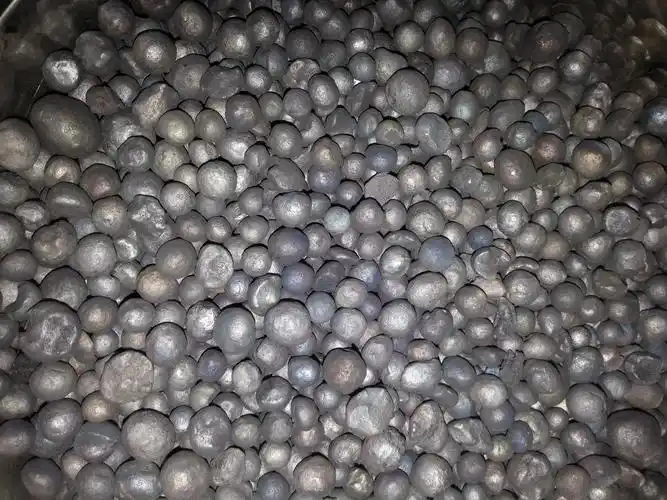
The indicator was influenced by a significant decrease in imports by Germany and the Netherlands
In January-November 2025, the European Union reduced its imports of direct reduced iron (DRI) by 24.7% y-o-y – to 1.9 million tons. Despite the overall decline, the structure of imports underwent significant changes, indicating a reorientation of supply chains.
Venezuela became the main supplier of DRI to the European Union during the reporting period, exporting 594.85 thousand tons of products, doubling its supplies y-o-y. The dynamics in this direction show a steady increase in volumes: in 2023, the EU imported 133 thousand tons of Venezuelan DRI, and in 2024, 293.98 thousand tons. This significant growth confirms a change in the geography of imports against the backdrop of a reduction in supplies from traditional sources.
Russia, which was previously the main supplier of DRI to the EU, significantly reduced its exports. In January-November, Russian companies shipped 584,650 tons of products, which is 41.2% less y/y. The main importers of Russian DRI remained Italy (312.14 thousand tons, down 36% year-on-year) and Belgium (135.27 thousand tons, down 34.7% year-on-year). Poland and Spain imported 55 thousand tons (-64.3% y-o-y) and 82.2 thousand tons (-26.6% y-o-y), respectively.
Among other suppliers, the US sent 362.31 thousand tons of DRI to the EU, increasing volumes by 11.8% y/y. Libya reduced exports to 223 thousand tons (-47.3% y/y).
The main importers of direct reduced iron to the EU in the first 11 months of 2025 were Italy – 821.12 thousand tons (+24.5% y/y), Austria – 341.58 thousand tons (+42.4% y-o-y), and Spain – 229.29 thousand tons (-5.3% y-o-y).
The resumption of supplies to these countries partially offset the sharp decline in imports from Germany and the Netherlands. Germany reduced its purchases from 438.45 thousand tons in January-November 2024 to 28.12 thousand tons in 2025, and the Netherlands – from 392.4 thousand tons to 145.03 thousand tons.
In November, the EU imported 181.42 thousand tons of DRI, which is 32.7% less y/y and 2.1% more m/m. Venezuela supplied 32.72 thousand tons (+20.7% y-o-y; -20.7% m-o-m) during the month, while the US supplied 29.37 thousand tons (-44% y-o-y; -17% m-o-m). Russia shipped 58.7 thousand tons (-44.1% y-o-y; +14.5% m-o-m), Libya – 29.57 thousand tons (did not supply in November 2024; +212% m-o-m).
It should be noted that in 2024, the EU increased its imports of direct reduced iron from third countries by 5.4% compared to 2023, to 2.75 million tons. In 2023, there was an 11.1% y/y decline. The largest importers of DRI among EU member states last year were Italy – 659.73 thousand tons (-23.7% y/y), the Netherlands – 527.27 thousand tons (+423%), and Germany – 438.46 thousand tons (-33.5%).